
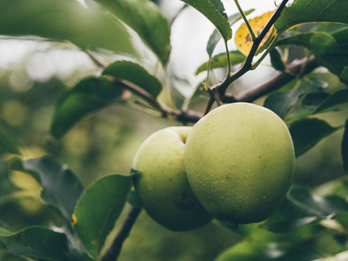
 Fall and apples go together like peas in a pod. And whether youre taking advantage of the bounty from local u-pick orchards, a year-end farmers market haul, or the plentiful organic apple reservoir at your favorite grocery store, theres certainly no shortage of our states most famous fruit. But on top of apple pie, ciderboth refrigerator cold and stove-top warmreigns supreme this time of year. In a few short posts, well show you how to make your own homemade traditional apple cider and how to make its harder cousin. So get your favorite kind of apples ready now and find some space in your kitchen. First, well start with the traditional recipe. Traditional Apple Cider Getting the Right Apples The key to making the best cider is striking the perfect balance between sweet and tart. And most companies that make their own cider usually blend apples that specialize in both to get their taste just right. Generally, you can use a ratio of three sweet to one tart if you like it more sweet, and two sweet to one tart if you like it more in the middle. Though youll have to do a little self-guided discovery, heres the low-down. Red and yellow delicious are find themselves on the sweeter side of the spectrum, while granny smith and gala call tart their home. Remember that it takes about one third of a bushel of apples to make a gallon of cider. Prep + Pulp Once you have the apples you need, be sure to clean them thoroughly and cut out any bruises or damaged parts and stems. Basically, cut out anything you wouldnt eat on the apple normally. Then, youll want to quarter the apples and add them to a blender or food processor. Mix them up there until they look like they have the consistency of applesauce. From here, youll want to strain the pulp through a cheesecloth to separate the juice from the pulp. You can use a fine-mesh sieve if you want to squeeze more juice out with the back of a spoon. Transfer the pulp youve strained to a different container. Then youre ready to enjoy a glass of cider! Store in a sealed container in the fridge for up to two weeks, or freeze if you want it to last you longer.
 Making Traditional Apple Cider, part 1
 Fall and apples go together like peas in a pod. And whether youre taking advantage of the bounty from local u-pick orchards, a year-end farmers market haul, or the plentiful organic apple reservoir at your favorite grocery store, theres certainly no shortage of our states most famous fruit. But on top of apple pie, ciderboth refrigerator cold and stove-top warmreigns supreme this time of year. In a few short posts, well show you how to make your own homemade traditional apple cider and how to make its harder cousin. So get your favorite kind of apples ready now and find some space in your kitchen. First, well start with the traditional recipe. Traditional Apple Cider Getting the Right Apples The key to making the best cider is striking the perfect balance between sweet and tart. And most companies that make their own cider usually blend apples that specialize in both to get their taste just right. Generally, you can use a ratio of three sweet to one tart if you like it more sweet, and two sweet to one tart if you like it more in the middle. Though youll have to do a little self-guided discovery, heres the low-down. Red and yellow delicious are find themselves on the sweeter side of the spectrum, while granny smith and gala call tart their home. Remember that it takes about one third of a bushel of apples to make a gallon of cider. Prep + Pulp Once you have the apples you need, be sure to clean them thoroughly and cut out any bruises or damaged parts and stems. Basically, cut out anything you wouldnt eat on the apple normally. Then, youll want to quarter the apples and add them to a blender or food processor. Mix them up there until they look like they have the consistency of applesauce. From here, youll want to strain the pulp through a cheesecloth to separate the juice from the pulp. You can use a fine-mesh sieve if you want to squeeze more juice out with the back of a spoon. Transfer the pulp youve strained to a different container. Then youre ready to enjoy a glass of cider! Store in a sealed container in the fridge for up to two weeks, or freeze if you want it to last you longer.